



A broken tooth can feel scary, especially if it hurts, bleeds, or looks badly damaged. You might wonder if you need to see a dentist right away or if it can wait a few days.
When pain, swelling, bleeding, or a large crack is involved, it may be a broken tooth emergency that needs same-day care.
Not every dental emergency looks the same, and that can make it hard to know what to do next. Your tooth pain, the size of the break, and any other symptoms you notice all help you decide how fast you need to act.
This guide will walk you through what to look for so you can protect your smile and your health.
You will also learn simple steps to take before you get to the dentist, why waiting too long can make things worse, and how a dentist may be able to save your tooth.
By the end, you will feel more confident about what your broken tooth means and what to do about it.
Key Takeaways
- How urgent your tooth injury is depends on your symptoms and the type of damage.
- Taking the right steps early and understanding the risks of waiting can help protect your tooth.
- Knowing what a dentist may do and how to prevent future breaks can help you feel prepared.
Decide How Urgent Your Tooth Injury Is
Not every broken tooth needs a same-day visit, but some do. Look at your pain level, whether you see swelling, and how much of the tooth is left, then use that to figure out your next step.
Signs You Need Same-Day Emergency Dental Care
Some symptoms tell you to call an emergency dentist right away instead of waiting.
- A severe toothache that does not ease up with over-the-counter pain relief
- Facial swelling or puffy gums near the broken tooth
- Bleeding that will not stop after a few minutes of gentle pressure
- A large piece of the tooth missing, especially if you can see pink or reddish tissue inside
- Pulp exposure or nerve exposure, which can look like a dark spot or hole in the center of the tooth
- Tooth mobility, meaning the tooth feels loose or shifts when you touch it
If you notice any of these, book urgent dental care as soon as you can, even if it means calling an after-hours line.
When a Small Chip Can Usually Wait Briefly
A tiny chip on the edge of a tooth often looks worse than it feels. If you have no pain, no swelling, and no sharp edges cutting your cheek or tongue, you likely have some time before you need to be seen.
Rinse your mouth with warm water and check for rough spots. You can smooth a sharp edge temporarily with sugar-free gum or dental wax.
Still, call your dentist’s office within a day or two to schedule a regular visit. Small chips can worsen with normal chewing, so it is worth getting checked through general dental care even without pain.
When to Go to the Emergency Room Instead
A dental office cannot treat everything. If your injury involves facial trauma, such as a broken jaw, heavy bleeding you cannot control, or a knocked-out tooth along with a head injury, go to the emergency room instead of waiting for a dentist.
A hospital emergency room can also help if you have swelling that is spreading to your eye, neck, or throat, or if you are running a fever along with tooth pain.
These signs can point to an infection that is spreading beyond the tooth, and that needs prompt medical attention alongside emergency dental treatment.
If you are unsure whether to choose urgent care or a dental office, call ahead. Staff can help you decide based on your symptoms.
Know the Type of Tooth Damage
Not all tooth damage is the same, and knowing what you’re dealing with helps you decide how fast you need to act.
The type of damage tells you a lot about whether your tooth is at risk or if you have time to plan your next move.
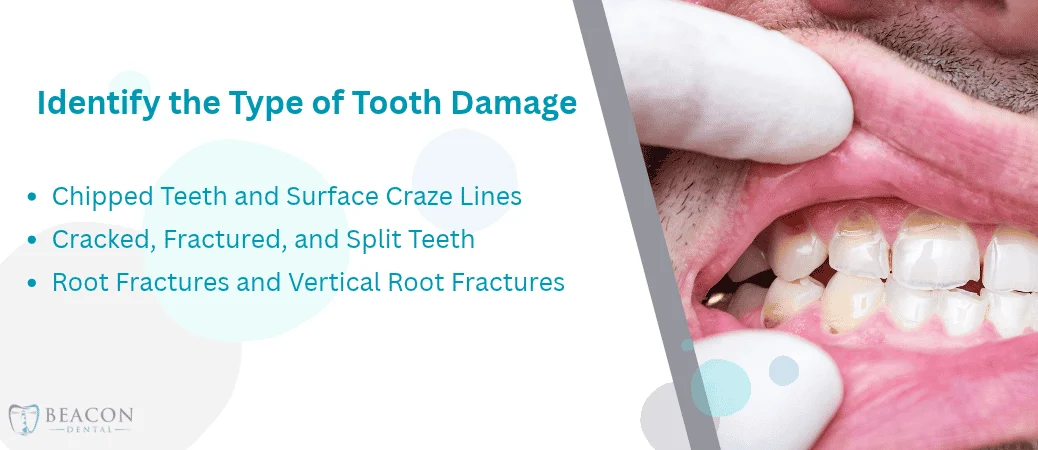
Chipped Teeth and Surface Craze Lines
A chipped tooth happens when a small piece of your tooth enamel breaks off. This is common if you bite down on something hard, like ice or a piece of candy.
Most chips are small and only affect the outer enamel layer. You might not even feel pain, especially with a chipped molar tooth since it’s farther back in your mouth.
Craze lines are different. These are tiny cracks in the enamel that don’t go deep into the tooth. You’ve probably seen them before without knowing what they were.
Craze lines are usually harmless and don’t need urgent care. They’re more of a cosmetic issue than a health risk.
Cracked, Fractured, and Split Teeth
A cracked tooth goes deeper than a craze line and can reach the dentin layer underneath your enamel. This layer is softer and more sensitive, so you may notice pain when you chew or when hot and cold foods touch the area.
A tooth fracture can also affect just part of the tooth, like a fractured cusp. This happens when a corner of your tooth breaks off, often around an old filling.
A split tooth is more serious. This means the crack has gone all the way through the tooth, splitting it into separate pieces.
If you have a split tooth, your dentist may not be able to save the whole tooth. Sometimes only part of it can be repaired, and the rest may need to come out.
Root Fractures and Vertical Root Fractures
A root fracture happens below your gum line, right in the tooth root. These are harder to spot because you can’t see them without an X-ray.
You might notice swelling near the gum or pain when you bite down, even if the visible part of your tooth looks fine. This can also affect the periodontal ligament that holds your tooth in place.
A vertical root fracture runs from the root up toward the chewing surface. These often don’t cause pain right away, which makes them tricky to catch early.
By the time you notice symptoms, the damage may already be serious. If your dentist finds a vertical root fracture, they’ll check if the tooth can be saved or if it needs to be removed.
Take These Steps Before You See a Dentist
A broken tooth can feel scary, but a few simple steps can protect your mouth and ease your pain until you get to the dentist.
Here’s what to do for bleeding, pain, and even a tooth that’s been knocked out completely.
Control Bleeding and Protect Sharp Edges
If your tooth is bleeding, don’t panic. Rinse your mouth gently with warm water to clean the area.
Then fold a piece of clean gauze and press it against the spot. Apply gentle pressure with gauze until the bleeding slows down.
Sharp edges on a broken tooth can cut your tongue or cheek. Cover them with dental wax or orthodontic wax, which you can find at most drugstores.
If a piece of your tooth broke off, don’t throw it away. Store the piece in milk or your own saliva and bring it with you to your appointment. Your dentist may be able to reattach it.
Reduce Pain and Swelling Safely
Pain from a broken tooth is common, but you have options to feel better. A cold compress or ice pack held against your cheek can help with swelling and discomfort.
Over-the-counter pain relievers like ibuprofen or acetaminophen can also ease the ache. Follow the directions on the label and don’t take more than what’s recommended.
Some people find relief by dabbing a small amount of clove oil on the sore area, since it has a numbing effect. Stick to soft foods like yogurt, mashed potatoes, or soup, and skip hard foods that could make the crack worse.
If you have a temporary rough spot, dental cement from a pharmacy can smooth it over until your dentist fixes it properly.
Handle a Knocked-Out Tooth Correctly
A knocked-out tooth needs fast action. Pick it up by the crown, not the root, and avoid touching the root at all.
If it’s dirty, rinse it gently with water, but don’t scrub it or use soap. Try to place the tooth back in its socket if you can do this comfortably.
If that’s not possible, keep the tooth moist in milk or your saliva until you reach the dentist. Time matters here, so try to get to a dentist within 30 to 60 minutes for the best chance of saving the tooth.
Understand Why Delaying Care Can Make Damage Worse
Waiting to fix a broken tooth can turn a small problem into a much bigger one. Bacteria can reach the inside of your tooth, pain can spread, and in some cases, you could lose the tooth for good.
Infection, Pulp Damage, and Increasing Pain
When a tooth breaks, it can crack open the outer layer that protects the soft tissue inside. This soft tissue is called the pulp, and it holds nerves and blood vessels.
If the break is deep enough, you get pulp exposure or nerve exposure. This lets bacteria from your mouth get inside the tooth. Once bacteria get in, an infection can start to grow.
You might notice a toothache that gets worse over time, along with sharp tooth pain when you bite down or drink something cold.
Swelling can also show up, and it may spread from your gums to your face. Facial swelling is often a sign that infection has spread beyond the tooth itself, so it’s something you should not ignore.
When a Crack Leads to Tooth Loss
A small crack may not seem like a big deal at first. But cracks don’t heal on their own, and they can slowly get bigger every time you chew.
Over time, a crack can spread down toward the tooth root. This weakens the whole structure of the tooth. Once a crack reaches the root, dental injuries like this often can’t be fixed with a simple filling or crown.
At this point, tooth loss becomes a real risk. If the infection spreads or the tooth breaks apart further, your dentist may need to remove it.
Getting a broken tooth checked early gives you a much better chance of saving it, instead of needing an extraction later.
Factors That Raise the Risk of a Break
Some habits and health issues make it more likely that you’ll break a tooth in the first place. Knowing what raises your risk can help you protect your smile.
Common factors include:
- Bruxism (teeth grinding): Grinding your teeth, especially at night, puts constant pressure on your teeth. Over time, this weakens enamel and can lead to cracks.
- Old fillings: Fillings don’t last forever. As they age, they can weaken the tooth around them, making a break more likely.
- Hard foods: Biting into ice, hard candy, or nuts can crack a tooth, especially if it’s already weakened.
- Past dental work: Teeth that have had root canals or large fillings tend to be more brittle.
If any of these apply to you, it’s worth asking your dentist about ways to lower your risk, such as a night guard for grinding or broken tooth repair options that strengthen weak teeth before they crack further.
What an Emergency Dentist May Do to Save the Tooth
Once you get to the dentist, they will look closely at the tooth before deciding on a fix. The plan depends on how deep the damage goes and whether the nerve is affected.
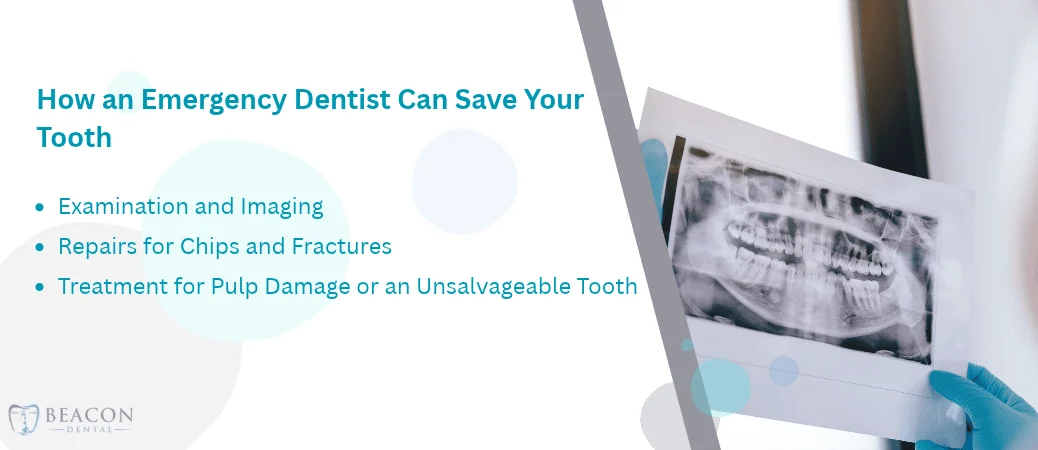
Examination and Imaging
Your dentist will start by checking the tooth and gum area by eye and touch. They will ask about your pain level, when the break happened, and what caused it.
X-rays are usually taken next. These images show if the crack reaches below the gum line or into the root, which you cannot see on your own.
This step also checks for hidden damage to the jaw or nearby teeth. It helps your emergency dentist figure out the safest and most effective treatment before touching your tooth.
Skipping this step could mean missing damage that needs care right away.
Repairs for Chips and Fractures
For small chips, dental bonding is often the easiest fix. A dentist shapes a tooth-colored resin over the damaged spot and hardens it with a light, all in one visit.
Bigger breaks may need a dental crown. A crown covers the whole tooth and protects it from more damage. If a chip is on a front tooth, your dentist might suggest veneers instead, since they can also improve the look of your smile.
Here is a quick breakdown:
| Damage Type | Common Fix |
| Small chip | Dental bonding |
| Broken cusp | Crown |
| Front tooth chip | Veneer |
Your dentist will explain which option fits your case and budget.
Treatment for Pulp Damage or an Unsalvageable Tooth
If the break reaches the pulp, the soft tissue inside your tooth, you will likely need a root canal.
During root canal treatment, the dentist removes the damaged pulp, cleans out the area, and seals it. A crown is usually placed afterward for strength.
Some cases need a specialist called an endodontist, who focuses on this kind of care. If there are signs of infection, your dentist may also prescribe antibiotics to keep it from spreading.
When a tooth is too damaged to save, extraction may be the only choice. In that case, your dentist can talk with you about a dental implant or another option to replace the missing tooth and restore your bite.
Lower the Risk of Another Broken Tooth
A little prevention goes a long way when it comes to protecting your smile. Simple habits, the right gear, and quick fixes for small problems can help you avoid another trip to the dentist for a cracked or chipped tooth.
Protect Teeth During Sports and Daily Activities
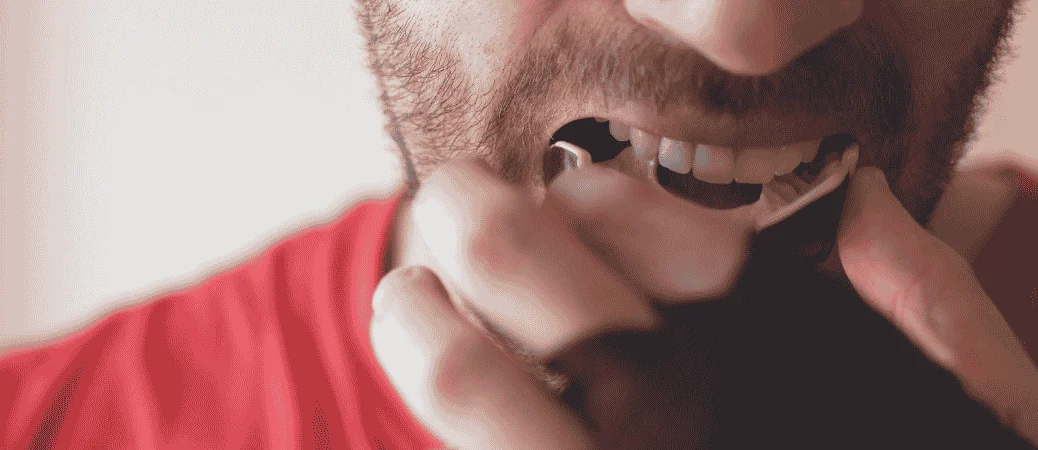
Wearing a mouthguard during sports is one of the easiest ways to prevent dental injuries to your teeth and mouth.
This is true whether you play a full-contact sport like football or something lower-impact like biking or skateboarding.
Your daily habits matter too. Chewing on ice, hard candy, or other hard foods puts a lot of stress on your tooth enamel and can cause cracks over time.
Try to avoid using your teeth as tools, like opening bottles or tearing packages. Small changes like these can protect your teeth from unnecessary damage.
Address Grinding and Weak Restorations Early
If you grind your teeth at night, a condition called bruxism, talk to your dentist about a custom night guard. Teeth grinding puts constant pressure on your enamel and can weaken teeth over time, making them more likely to crack.
Old fillings and worn-out restorations are another common cause of broken teeth. As fillings age, they can shrink or loosen, leaving the tooth around them weak and prone to fracture.
If you have an old filling or a dental crown that feels loose or uneven, get it checked out soon. Catching these issues early can help you avoid a bigger problem down the road.
Frequently Asked Questions
A broken tooth can raise a lot of questions, from how bad it really is to what to do about it right now. Here are answers to the most common questions people ask about broken and chipped teeth.
How do I know if a broken tooth needs emergency dental care?
You should look for a few clear warning signs. If you have severe pain, bleeding, a large piece of your tooth missing, or a sharp edge cutting your tongue or cheek, you need same-day emergency dental care.
A dark spot or hole in the tooth is also a red flag. It can mean the nerve is exposed, which lets bacteria get inside.
If your chip is small, smooth, and doesn’t hurt, you likely have a few days before you need to be seen. Still, it’s smart to call your dentist soon to be sure.
Can I wait until tomorrow to see a dentist for a chipped or cracked tooth?
It depends on how bad the damage looks and feels. A tiny chip with no pain and no rough edges can often wait a day or two, but you shouldn’t put it off for weeks.
Cracks are trickier than chips because you can’t always see how deep they go. A hairline crack can spread over time, so getting it checked sooner rather than later protects your tooth.
If you notice new pain, swelling, or sensitivity while you wait, don’t ignore it. Call your dentist right away instead of waiting for your original plan.
What should I do right away if a piece of my tooth breaks off?
First, find the broken piece if you can. Place it in a small container of milk instead of water, since milk helps keep the tooth fragment in better condition for your dentist.
Next, rinse your mouth gently with warm salt water to clean the area. This can help lower the risk of bacteria building up around the break.
If there’s a sharp edge, cover it with dental wax from a pharmacy so it doesn’t cut your tongue or cheek. You can also take ibuprofen or acetaminophen for pain, and try to chew on the other side of your mouth until you see your dentist.
Is a broken tooth painful even if the nerve is not exposed?
Yes, it can still hurt even without nerve exposure. A crack or chip can cause sensitivity to hot, cold, or pressure just from the change in the tooth’s structure.
That said, it’s also common to have no pain at all with a small chip. This doesn’t mean the tooth is fine, since bacteria can build up quietly on an exposed surface even without symptoms.
Because pain isn’t a reliable guide, it’s best to have any broken tooth checked rather than waiting to see if it starts to hurt.
What happens if I leave a broken tooth untreated?
Your tooth won’t heal on its own, and the damage will likely get worse with time. Enamel doesn’t grow back, so a small chip today can turn into a bigger, more painful problem later.
Left untreated, bacteria can work their way into the tooth and reach the nerve. This can lead to an infection or abscess, which may need a root canal that could have been avoided with earlier care.
An untreated broken tooth can also cause problems beyond the tooth itself. It may shift your bite, leading to jaw strain or headaches, and a sharp edge can even damage the teeth next to it over time.
Can a dentist repair a broken tooth in one visit?
Often, yes, especially for smaller breaks. Dental bonding can usually be finished in a single visit, typically in about 30 to 60 minutes, using a tooth-colored resin that’s shaped and hardened right in the chair.
Bigger repairs usually take more time. A crown typically needs two visits, and if a root canal is required first, you’ll need one or two extra appointments before the crown goes on.
Your dentist will let you know which option fits your situation once they’ve taken a look and possibly an X-ray.


