

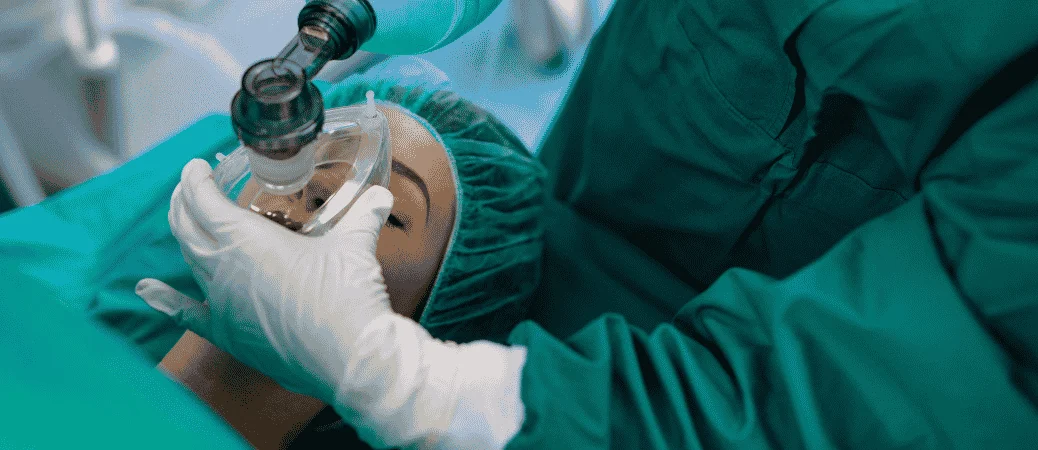
Understanding the health factors for sedation dentistry can help you prepare for a more comfortable dental experience.
Your medical history, medications, breathing, and heart health all influence which type of sedation may be appropriate for you.
For patients with dental anxiety, a strong gag reflex, or a lengthy treatment plan, sedation dentistry can make dental care easier to manage.
Your dentist will review your overall health and treatment needs before recommending a suitable option.
There is no universal checklist. A person who needs a closer look before oral sedation may still be a fine fit for nitrous oxide. Dental sedation is matched to you, the procedure, and the setting where it happens.
If you have been postponing dental care because you are concerned about a medical condition or medication, discuss those concerns with your dentist.
Sharing your complete health history helps the dental team recommend an appropriate sedation plan.
Key Takeaways
- Sedation fits many anxious or gag-prone adults, but each person needs an individual review.
- Breathing problems, heart health, and medicines get the most careful look.
- Sedation calms you, while numbing shots still handle the pain.
When Can Sedation Make Dental Care Easier?
Sedation can make dental care easier when fear, gagging, or long treatment time keeps you from getting the work you need.
These reasons are common and valid, and they often overlap. A person with past bad experiences may also gag more easily when tense.
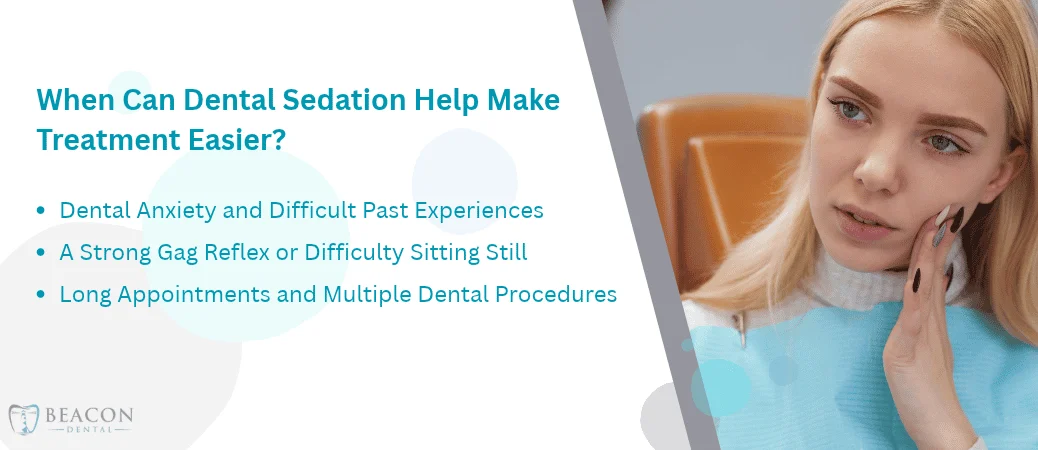
Dental Anxiety and Difficult Past Experiences
Dental anxiety is one of the most common reasons people ask about sedation. You might feel uneasy about needles, the sound of the drill, or not knowing what comes next.
For many adults, the fear traces back to one painful or rushed visit, often in childhood. That history is useful clinical information. It tells your dentist what to slow down, explain, or avoid.
Mild dental anxiety does not always require medication. Regular breaks, hand signals, and clear explanations can help you feel more comfortable during treatment.
If uncertainty has kept you from scheduling an appointment, reviewing what to expect at your first dental visit can help you feel more prepared.
Your dentist can also discuss whether sedation would make receiving care easier.
A Strong Gag Reflex or Difficulty Sitting Still
A strong gag reflex can make routine dental appointments more challenging.
Regular dental cleanings and exams help protect your teeth and gums, and your dental team can discuss adjustments that make these visits more comfortable. For some patients, appropriate sedation may provide additional support.
Light sedation may help reduce anxiety and make dental treatment more manageable for patients with a sensitive gag reflex.
If back pain, restless legs, or another condition makes sitting still difficult, your dentist can also discuss positioning adjustments, breaks, and other ways to improve comfort.
Long Appointments and Multiple Dental Procedures
If you need several fillings or other restorative procedures, your dentist may recommend combining appropriate treatments into one appointment.
Treatments such as dental crowns and bridges can restore damaged or missing teeth, while sedation may help you remain comfortable during a longer visit.
Fewer visits can mean less time off work and fewer days of worry before each one. For extractions and other surgical work, sedation is often paired with oral surgery planning.
For patients who need extensive restorative care, full mouth reconstruction can bring multiple treatments together in a coordinated plan.
Your dentist will consider the procedures involved, appointment length, medical history, and comfort needs when determining whether sedation is appropriate.
Which Health Conditions Need a Closer Review?
Conditions that affect your breathing, heart, or how your body clears medicine need a closer review before sedation.
Some only call for extra monitoring. Others mean you should postpone treatment or see your doctor first.
Here is a simple way to think about the difference:
| Situation | What it often means |
| Stable, well-managed condition | Sedation may proceed with extra precautions |
| Suspected but undiagnosed problem | Testing or a doctor’s input may come first |
| Unstable or recently worsened condition | Elective sedation is usually postponed |
Obstructive Sleep Apnea and Other Breathing Problems
Obstructive sleep apnea causes repeated narrowing or blockage of the airway during sleep.
Some sedative medications can reduce airway muscle tone or interfere with normal breathing, so patients with sleep apnea need an individualized assessment before dental sedation.
Tell your dentist if you use a CPAP machine, snore loudly, or wake up gasping. Even suspected sleep apnea should be discussed before sedation.
Your dentist may recommend medical evaluation, coordinate care with your sleep specialist, or adjust the sedation plan based on your airway risks.
COPD, severe asthma, and nasal blockage also need a look. A stuffy nose, for example, can make nitrous oxide hard to use since you breathe it through your nose.
Hypertension, Angina, and Cardiovascular Stability
Controlled high blood pressure is common and does not rule you out on its own. Your dentist will check your reading at the visit and compare it to your usual numbers.
Uncontrolled high blood pressure, worsening heart disease, or a recent heart attack may require medical consultation before elective dental sedation.
New or worsening chest pain, particularly at rest, needs prompt medical attention.
Your dentist may postpone elective treatment until your cardiovascular condition has been evaluated and stabilized.
If you are experiencing active chest pain, especially with shortness of breath, sweating, or dizziness, seek emergency medical care immediately.
Pregnancy, Liver or Kidney Disease, and Previous Anesthesia Reactions
Elective dental sedation may be postponed during pregnancy, depending on the treatment and medications involved.
The American Dental Association recommends avoiding nitrous oxide exposure during pregnancy. However, necessary dental treatment should not be delayed solely because you are pregnant.
Your dentist can coordinate with your obstetrician to determine appropriate treatment and pain-control options.
Share any past problem with anesthesia, including long wake-up times, severe nausea, or allergic reactions. Also mention if a family member had a serious anesthesia reaction.
A past reaction does not always mean sedation is off the table; it may mean the team avoids one drug and picks another.
Could Your Medications Affect Sedation?
Yes, your medications can change how strongly sedation affects you, so your dentist needs a complete list. Drug interactions can make sedation medications act too strongly, slow your breathing, or work less well than planned.

Prescription Medicines, Supplements, and Allergies to Disclose
Bring a written list of everything you take. Include:
- Prescription medicines, with doses and times
- Over-the-counter pain relievers, allergy pills, and cold medicine
- Vitamins and herbal products such as St. John’s wort, valerian, or kava
- Medicines you take only now and then
- Any drug, latex, or material allergies
Antidepressants, seizure medicines, some antibiotics, and blood pressure drugs can all shift how sedation behaves. Sedatives can lower blood pressure, and that drop can be bigger when combined with heart medicines.
Keep an updated list of your medications, including their names, doses, and how often you take them.
If you are new to Beacon Dental, completing your new patient forms before your appointment can help the team review your medical history and prepare for a discussion about sedation.
Alcohol, Opioids, Sleep Aids, and Other Sedating Substances
Some medications and substances can increase the effects of dental sedation.
Benzodiazepines are among the medications used for conscious sedation, and a 2016 systematic review of dental sedation medications identified midazolam as a frequently used option for moderate sedation in dental surgical procedures.
The medication selected depends on the patient’s health, treatment needs, and planned sedation level.
The FDA warns that combining benzodiazepines with opioids or other central nervous system depressants can cause serious breathing problems.
Tell your dentist about opioid pain medications, sleep aids, anxiety medications, and other substances before sedation is planned.
Be honest about alcohol, cannabis, and other recreational substances too. Your dental team asks so they can keep you safe, and they will likely ask you to avoid alcohol for a set time before your visit.
Why Medication Changes Need Your Prescriber’s Guidance
Never stop or skip a prescribed medicine on your own to get ready for sedation. Stopping some drugs suddenly, including blood pressure and anxiety medicines, can cause its own problems.
If a change is needed, your dentist and the doctor who prescribed it should decide together. You may be told to take your usual morning pills with a small sip of water, or to shift the timing of one dose.
How Do Nitrous Oxide and Oral Sedation Compare?
Nitrous oxide is a fast-acting inhaled sedative that usually produces minimal sedation and wears off quickly.
Oral sedation uses prescribed medication that may produce a stronger or longer-lasting effect, depending on the dose and individual response.
Local anesthesia can be used with either option when a procedure requires pain control.
| Feature | Nitrous oxide | Oral sedation |
| How it’s given | Breathed through a nose mask | Pill taken by mouth |
| Usual depth | Minimal | Minimal to moderate |
| Adjustable during visit | Yes | No, once swallowed |
| Recovery | Fast | Several hours |
| Driver needed | Ask your dentist | Yes |
Nitrous Oxide: Nasal Breathing and Rapid Recovery
Nitrous oxide, also called laughing gas, is mixed with oxygen and breathed through a small mask over your nose. Most people feel calm, warm, or a bit tingly within a few minutes.
The dentist can turn it up or down during the visit, and it clears soon after the mask comes off.
A review of nitrous oxide inhalation sedation describes its rapid onset and recovery as useful advantages in dental care.
Your dentist will still review your medical history and ability to breathe comfortably through your nose before recommending it.
Oral Sedation: Variable Effects and Escort Requirements
Oral conscious sedation uses a prescribed medication taken before treatment according to your dentist’s instructions.
Patients typically remain responsive but may feel drowsy, deeply relaxed, or remember little of their appointment afterward.
People respond to the same pill differently. Body size, other medicines, and liver function all play a part, and the dose cannot be dialed back once it is in your system.
Arrange for a responsible adult to drive you to and from your appointment and provide supervision as instructed.
Follow your dentist’s recovery guidelines, including restrictions on driving, operating machinery, drinking alcohol, and making important decisions until it is safe to resume those activities.
Sedation Depth Is Different From Delivery Method
The way a drug enters your body is separate from how deeply it sedates you. Levels of sedation run along a scale: minimal, moderate, deep, and general anesthesia.
A pill can produce minimal sedation in one person and moderate sedation in another. During moderate sedation, patients generally respond purposefully to verbal instructions or light touch and maintain adequate spontaneous breathing.
The dental team monitors the patient’s response and must be prepared to manage changes in sedation depth.
The ADA released updated sedation and anesthesia guidelines on April 20, 2026, which tie training and monitoring to the depth reached. That is why your dentist plans around the intended depth, whichever method is used.
Why Local Anesthesia Still Matters for Pain Control
Sedation helps reduce anxiety and promote relaxation, while local anesthesia blocks pain in the treatment area. If your dental procedure requires numbing, your dentist can administer local anesthesia alongside sedation.
The good news is that sedation often makes the shot easier. For some patients, feeling more relaxed makes receiving local anesthesia easier to tolerate.
You may still notice pressure or movement during treatment, but tell your dentist if you experience pain.
What Does the Dentist Check Before Approving Sedation?
Before recommending sedation, your dentist reviews your medical history, medications, vital signs, and any factors that could affect breathing or recovery.
At Beacon Dental, the team discusses sedation options and preparation instructions before treatment, helping you understand what to expect.
Medical History, Vital Signs, and ASA Physical Status
Your dentist will go over your health conditions, medicines, allergies, and past sedation experiences. Expect blood pressure, pulse, and often an oxygen reading.
Many dentists use the American Society of Anesthesiologists physical status classification. It sorts general health into groups:
- ASA I: A healthy patient without systemic disease.
- ASA II: A patient with mild systemic disease, such as well-controlled high blood pressure.
- ASA III: A patient with severe systemic disease who may require additional evaluation or medical coordination.
- ASA IV: A patient with severe systemic disease that poses a constant threat to life.
Clinical studies often use the ASA classification to describe participants’ general health.
The 2016 systematic review discussed earlier included 1,003 patients classified as ASA I or II.
However, patients with more complex medical conditions may require additional evaluation, medical consultation, or treatment in a different setting. Your dentist uses this classification as one part of an individualized assessment.
Airway Evaluation and the Mallampati Score
An airway evaluation checks how open your throat is and how easy it would be to help you breathe if needed. Your dentist may look at your neck, jaw, and mouth opening.
The Mallampati classification is a quick look inside your mouth while you open wide and stick out your tongue.
It runs from Class I, where the back of the throat is easy to see, to Class IV, where only the hard palate shows. Higher classes suggest a more crowded airway and call for more caution.
When Medical Consultation or a Different Setting Is Needed

Sometimes the safest next step is a note from your doctor. This often happens with suspected sleep apnea, unstable heart symptoms, severe lung disease, or complex medication lists.
In other cases, deeper sedation in a hospital or surgery center with an anesthesia team fits better. That referral is a safety step, and it still gets your treatment done.
Personalized Fasting, Transportation, and Recovery Instructions
Eating and drinking instructions depend on the planned sedation level, medications, and individual health considerations.
Your dentist will explain whether fasting is necessary, when to stop eating or drinking, and how to take any approved medications before treatment.
Follow those instructions rather than applying a general fasting schedule.
Start With a Personalized Sedation Assessment
The clearest way to know if you qualify is a one-on-one assessment with your dentist. Your anxiety, gag reflex, or treatment plan explains why you want sedation.
Your breathing, heart health, and medicines decide which type is a safe fit.
Before your consult, gather a few things:
- A full medication and supplement list
- Recent blood pressure readings or a CPAP prescription, if you have one
- Notes on past reactions to anesthesia
- Questions about rides, fasting, and recovery time
If you are ready to talk it through, the team at Beacon Dental can review your options for sedation dentistry and explain whether nitrous oxide, oral sedation, or a referral makes sense for you.
Bring your list, ask every question you have, and let the plan be built around your health.
At Beacon Dental, Dr. Kaitlyn Spencer can review your medical history, medications, and dental treatment needs to help determine whether nitrous oxide or oral sedation is appropriate for you.
Frequently Asked Questions
Can I have dental sedation if I have sleep apnea?
Possibly, but obstructive sleep apnea needs a closer review first. Your dentist may choose lighter sedation, ask you to bring your CPAP, or check with your doctor before going ahead.
Does controlled high blood pressure rule out sedation?
No, controlled hypertension does not rule you out on its own. Your dentist will check your reading that day, and very high or unstable numbers may mean postponing until your doctor weighs in.
Can I take my usual anxiety medication before dental sedation?
Tell your dentist about any prescribed anxiety medications before your appointment. Some medications can interact with dental sedatives and increase drowsiness or breathing risks.
Do not stop, skip, or take an additional dose unless your dentist and prescribing clinician have advised you to do so.
Can I qualify for nitrous oxide if oral sedation is not suitable?
Possibly. Nitrous oxide may be appropriate for some patients who are not suitable candidates for oral sedation because it works quickly and usually wears off soon after treatment.
However, your dentist must still assess your medical history, breathing, medications, and any other contraindications before recommending it
Will sedation help if local anesthesia has not worked well before?
Sedation may help you feel less anxious about receiving local anesthesia, but it does not correct every reason a tooth may be difficult to numb.
Tell your dentist about previous problems with anesthesia so they can consider a different medication, injection technique, or pain-management approach.