


A toothache that starts on Friday afternoon might seem like something you can handle with pain medicine until your dentist opens on Monday.
But some tooth infections move fast and waiting even a day or two can turn a treatable problem into a serious health emergency.
If you have severe facial swelling, high fever, trouble breathing or swallowing, or pain that won’t respond to medication, you need emergency dental care right away; these are signs your infection is spreading beyond your tooth.
Tooth infections don’t get better on their own. They start when bacteria enter through a crack or cavity and reach the inner pulp of your tooth.
From there, the infection can spread to your gums, jaw, and even into your bloodstream.
Understanding which symptoms mean you can wait for a regular appointment and which ones require immediate attention can protect your health and possibly save your life.
Most people don’t realize that dental infections can spread to other areas of the body and create dangerous complications.
The good news is that recognizing the warning signs early gives you time to get the treatment you need before things get worse.
This guide will help you identify when your toothache has crossed the line into emergency territory and what steps to take next.
Key Takeaways
- Severe facial swelling, fever, or difficulty breathing with tooth pain requires immediate emergency care
- Tooth infections spread beyond the tooth when left untreated and can become life-threatening
- Taking quick action when you notice warning signs prevents more complex and expensive treatment later
Critical Warning Signs You Should Never Ignore
Some tooth infection symptoms demand immediate attention, even if it’s the weekend. Recognizing these red flags can protect you from life-threatening complications that develop when bacteria spread beyond your tooth.
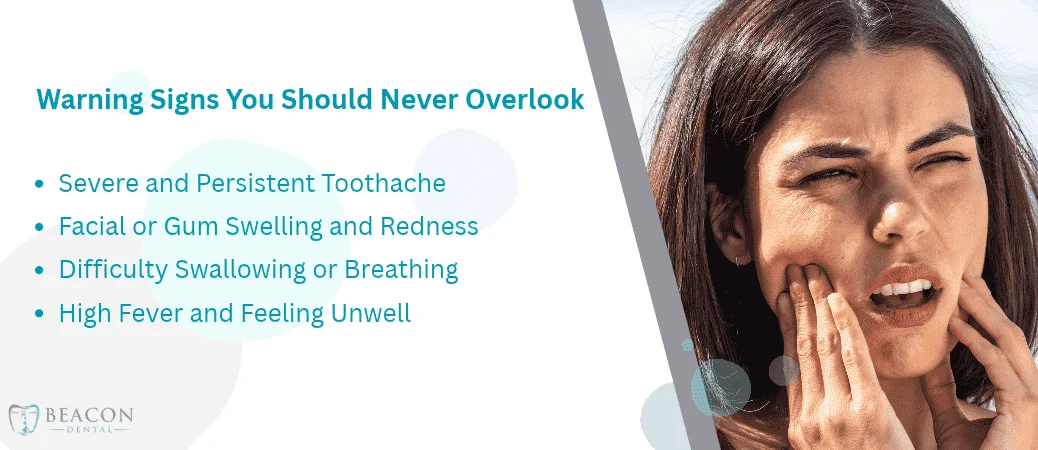
Severe and Persistent Toothache
A throbbing, constant tooth pain that won’t go away signals a serious problem. This type of severe toothache often means a dental abscess has formed deep inside your tooth or in the surrounding tissue.
You might notice the pain gets worse when you lie down or bite on food. The discomfort can radiate to your jaw, neck, or ear.
If over-the-counter pain relievers barely touch the pain or only provide relief for an hour or two, your body is telling you something is seriously wrong.
Pay attention if your tooth pain:
- Wakes you up at night
- Makes it hard to focus on daily tasks
- Continues for more than a day without improvement
- Increases in intensity over several hours
A persistent bad breath that doesn’t improve with brushing often accompanies this pain. This foul odor comes from the bacteria and pus associated with abscess formation.
Facial or Gum Swelling and Redness
Facial swelling is one of the most serious warning signs of a tooth infection. When you see visible puffiness in your cheek, jaw, or under your chin, the infection has spread beyond the tooth itself.
Swollen gums around the affected tooth appear red and feel tender to touch. You might notice a pimple-like bump on your gums filled with pus. This visible collection of pus indicates a tooth abscess that needs drainage.
The swelling can progress quickly. What starts as mild gum swelling in the morning can balloon into significant facial swelling by evening. If the swelling spreads to your eye area or causes your face to look asymmetrical, seek emergency dental care immediately.
Swollen lymph nodes in your neck or under your jaw also indicate your body is fighting the infection. These feel like tender lumps when you touch the area.
Difficulty Swallowing or Breathing
Trouble swallowing or breathing represents a dental emergency that requires immediate medical attention. When a tooth infection spreads to your throat or jaw muscles, it can cause Ludwig’s angina, a rare but dangerous condition.
Seek emergency care if you experience:
- Tightness in your throat
- Problems opening your mouth fully
- Pain when you try to swallow
- Shortness of breath or rapid breathing
These symptoms mean the infection has moved into the deeper spaces of your neck and face. The swelling can block your airway within hours. This situation won’t improve on its own and can become life-threatening quickly.
If you notice any breathing difficulties paired with jaw pain or facial swelling, go to the emergency room right away. Don’t wait until Monday.
High Fever and Feeling Unwell
A fever above 100.4°F combined with tooth pain indicates the infection is spreading throughout your body. Your immune system is fighting hard, but it needs help from antibiotics and professional treatment.
Signs of sepsis include confusion, rapid heart rate, extreme fatigue, and clammy skin. You might feel dizzy or disoriented. Some people experience chills, sweating, nausea, or vomiting.
If you feel generally unwell with flu-like symptoms along with tooth infection symptoms, don’t assume it’s just a cold or flu. The combination of fever and dental pain points to a spreading infection.
Watch for these warning signs:
- Temperature that keeps rising
- Feeling weak or unable to stand
- Dark-colored urine or decreased urination
- Mental confusion or difficulty staying alert
These signs of tooth infection becoming systemic require immediate medical intervention. Sepsis can progress to septic shock within 12 to 24 hours, causing blood pressure to drop dangerously low.
How Tooth Infections Become Dangerous
A tooth infection starts small but can quickly turn into a serious health threat. The bacteria from a dental abscess don’t always stay put, and ignoring early warning signs can lead to severe complications throughout your body.
The Risks of Ignoring Symptoms
When you first develop a tooth infection, you might notice some jaw pain or sensitivity. Many people try to push through these symptoms or take over-the-counter pain relievers hoping the problem will go away on itself.
This approach puts you at serious risk. A tooth abscess forms when bacteria invade the soft tissue inside your tooth. The infection creates a pocket of pus that continues to grow if left untreated.
Early symptoms you shouldn’t ignore include:
- Throbbing pain in or around the tooth
- Sensitivity to hot and cold
- Bad breath that won’t go away
- A bad taste in your mouth
- Redness and swelling in your gums
Some people wonder how long until a tooth infection kills you, but the real danger is in waiting to find out. The longer you delay treatment, the more time bacteria have to multiply and spread.
When Infection Spreads Beyond the Tooth
Your infected tooth sits close to important structures in your head and neck. The bacteria from abscess formation can travel through your jaw bone into surrounding tissues.
You’ll know the infection is spreading when you develop swollen lymph nodes under your jaw or in your neck. These nodes swell up as your immune system tries to fight off the bacteria.
The infection can move into your jaw bone, causing severe pain and swelling in your face. In some cases, the bacteria travel down into your neck or up toward your brain.
This happens because tooth infections can spread to other areas through your bloodstream and tissue connections.
Fever often develops at this stage. You might feel generally unwell or have trouble opening your mouth fully.
Potential Life-Threatening Complications
Once bacteria enter your bloodstream, the situation becomes critical. Serious complications from a dental abscess include sepsis, which happens when your body’s response to infection causes widespread inflammation.
Signs of sepsis include:
- High fever or very low body temperature
- Rapid heart rate
- Confusion or disorientation
- Extreme pain or discomfort
- Difficulty breathing
Other dangerous complications include Ludwig’s angina, a serious infection that affects the floor of your mouth and can block your airway. Brain abscesses can form when bacteria reach your brain tissue. These conditions can be fatal within days without emergency treatment.
People with periodontal disease, diabetes, or weakened immune systems face higher risks. An untreated tooth infection can become life-threatening within 2 to 4 weeks, though this timeline can be much shorter in vulnerable individuals.
Worried about a tooth infection in Winterville, NC? Contact Beacon Dental for urgent guidance.
Common Causes and Hidden Triggers
Tooth infections don’t appear out of nowhere. They develop from specific dental problems that worsen over time, often starting with issues you might not notice right away.

Untreated Tooth Decay and Cavities
Tooth decay causes pain when the damage goes through your enamel and reaches the softer dentin layer underneath. If you ignore a cavity, bacteria keep eating away at your tooth structure.
The infection spreads deeper into the pulp where your nerves and blood vessels live. This is when you might feel sharp pain from hot or cold foods that won’t go away quickly.
Untreated tooth decay is one of the main reasons people develop serious dental infections. What starts as a small cavity can turn into a painful abscess in just weeks or months.
Your tooth enamel can’t repair itself once bacteria create that hole.
Gum Disease and Periodontal Infections
Gum disease starts with inflammation along your gum line but can progress to damage the bone supporting your teeth. Periodontal disease often begins in young adulthood, and without treatment, it commonly leads to tooth pain and loss as you age.
When bacteria build up below your gum line, they create pockets of infection. These periodontal infections can spread to nearby teeth and tissue.
Your gums might bleed when you brush or look red and swollen. Advanced periodontal disease weakens the structures holding your teeth in place. This makes your teeth more vulnerable to infections that can become urgent problems.
Poor Oral Hygiene Habits
Poor oral hygiene creates the perfect environment for bacteria to multiply in your mouth. When you skip brushing or flossing, food particles and plaque stick to your teeth and gums.
Key hygiene problems that lead to infections:
- Not brushing twice daily
- Skipping flossing between teeth
- Ignoring your tongue when cleaning
- Going too long between dental checkups
Bacteria feed on the sugars and starches left in your mouth. They produce acids that attack your enamel and toxins that irritate your gums.
Over time, this poor oral hygiene leads to cavities and gum infections that can escalate quickly.
Dental Trauma and Failed Dental Work
Dental trauma from accidents or injuries can damage your tooth’s pulp immediately or even years later. A crack or chip in your tooth creates an opening for bacteria to enter.
Tooth trauma might show problems soon after the injury or decades down the road.
Old dental work can also fail and cause infections. A dental filling might crack or fall out, leaving your tooth exposed. A root canal that wasn’t completed properly can allow bacteria to grow inside your tooth.
Failed dental work sometimes happens because of wear and tear over many years. Sometimes the seal around a filling breaks down, letting bacteria sneak underneath where you can’t clean.
What to Do If You Suspect a Tooth Infection Emergency
Taking quick action when you notice severe symptoms can prevent a tooth infection from becoming life-threatening.
You need to know the right steps to get relief, when professional help is urgent, and how to stay comfortable until treatment begins.
Immediate Steps for Relief and Safety
Call your dentist right away when you notice warning signs like severe swelling, high fever, or trouble breathing. Even if it’s after hours, many dental offices have emergency lines that can guide you on what to do next.
Keep your head elevated while resting to reduce swelling and pressure. Rinse your mouth gently with warm salt water every few hours to help clean the area around the infected tooth.
Avoid putting pressure on the tooth by eating soft foods only. Stay away from hot or cold drinks that can trigger more pain.
Take your temperature regularly and write down any changes in your symptoms. This information helps doctors make better treatment decisions when you arrive for care.
Don’t try to drain the abscess yourself or use sharp objects near the infected area. This can spread bacteria and make the infection worse.
When to Call an Emergency Dentist or Visit the ER
You need to seek emergency dental care immediately if you have a fever above 101°F combined with facial swelling. These signs mean the infection could be spreading beyond your tooth.
Go to the emergency room right away if you experience:
- Difficulty breathing or swallowing
- Rapid swelling in your face or neck
- Confusion or dizziness
- Severe pain that doesn’t respond to medication
An emergency dentist can perform dental procedures to treat the infection directly. However, if you can’t reach your dentist and have serious symptoms, the ER will provide IV antibiotics and stabilize your condition until you see a dentist.
If your symptoms are mild with localized pain and no fever, you can likely wait a day or two. But don’t delay scheduling an urgent dental care appointment as soon as offices open.
Treatment Options: Root Canal Therapy, Drainage, and Antibiotics
Your dentist will first drain any pus from the abscess to relieve pressure and remove infected material. This provides immediate pain relief and helps stop the infection from spreading further.
Root canal therapy saves your natural tooth by removing infected pulp from inside the tooth. The dentist cleans the inner chambers, disinfects them, and seals the space to prevent future infections.
This procedure often requires a dental filling or crown afterward to restore the tooth’s strength.
Sometimes extraction is necessary if the tooth is too damaged to save. While losing a tooth isn’t ideal, removing it stops the infection and protects your overall health.
Your dentist will prescribe antibiotics to kill remaining bacteria throughout your body. You must take the full course of medication even if you start feeling better after a few days.
Patients with severe infections may need IV antibiotics at a hospital before receiving dental treatment. This approach ensures the infection is under control before any procedures begin.
Managing Pain While Waiting for Care
Over-the-counter pain relievers like ibuprofen or acetaminophen can reduce discomfort until you see a dentist. Follow the dosage instructions on the package and don’t exceed recommended amounts.
Apply a cold compress to the outside of your cheek for 15 minutes at a time. This reduces swelling and numbs the area temporarily. Never put ice directly on your skin or inside your mouth.
Clove oil has natural numbing properties that can help with tooth pain. Dab a small amount on a cotton ball and place it near the affected tooth for short periods.
Avoid lying flat when sleeping because this increases blood flow to your head and worsens throbbing pain. Prop yourself up with extra pillows instead.
Stay hydrated by drinking plenty of water, but avoid sugary drinks that can feed bacteria. Don’t use alcohol-based mouthwashes that might irritate the infected area further.
Preventing Tooth Infections and Protecting Your Dental Health
Taking care of your teeth through daily cleaning habits and regular checkups can stop infections before they start.
Simple steps like brushing properly, flossing daily, and seeing your dentist can protect you from painful problems that might need emergency treatment.

The Importance of Good Oral Hygiene
Your daily oral hygiene routine is your first defense against tooth infections. You need to brush your teeth twice a day with fluoride toothpaste to remove plaque, a sticky film of bacteria that causes decay and infections.
Flossing is just as important as brushing. When you skip flossing, you miss cleaning about 40% of your tooth surfaces where bacteria hide between teeth.
This can lead to swollen gums and bleeding gums that signal early infection.
Good oral hygiene practices should also include rinsing with a fluoride mouthwash daily. If you wear dentures, clean them every day to prevent fungal infections in your mouth. Remove them at night when possible to give your gums a break.
Early Detection Through Regular Dental Checkups
You should visit your dentist at least once a year, even if your teeth feel fine. Your dentist can spot early signs of problems that you might miss, like small cavities or gum disease that haven’t caused pain yet.
A regular dental checkup gives your dentist the chance to examine your mouth for infections, check existing dental fillings, and catch issues when they’re easier to treat.
More than 80% of people will have at least one cavity by age 34, making these visits critical for your dental health.
If you have diabetes or other chronic conditions, you might need dental cleanings multiple times per year.
Pregnant women should also schedule at least one dental visit before delivery since pregnancy increases your risk of cavities and gum disease.
Tips for Reducing Infection Risk
Beyond brushing and regular dental care, several habits protect your teeth from infection. Avoid foods and drinks with added sugar as much as possible since sugar feeds the bacteria that cause tooth decay.
Drink fluoridated tap water throughout the day to strengthen your tooth enamel. If you smoke or use tobacco products, quit now; tobacco use significantly increases your risk of oral infections and cancer.
Wear a mouthguard during contact sports to protect your teeth from damage that could lead to infection.
If you notice loose teeth, persistent pain, or sudden changes in taste, contact your dentist right away rather than waiting for your next scheduled appointment.
Managing dry mouth is also important for dental health. Drink plenty of water and ask your doctor about medication alternatives if your current prescriptions make your mouth dry.
Frequently Asked Questions
Tooth infections raise urgent questions about timing and safety. Knowing which symptoms require immediate care and understanding how infections spread can help you make the right decision for your health.
What are the warning signs that a tooth abscess is becoming dangerous?
A tooth abscess becomes dangerous when you develop a fever above 101°F, severe facial swelling, or intense pain that won’t respond to over-the-counter medication. These signs mean the infection is spreading beyond the tooth.
You should also watch for difficulty swallowing, sleep apnea, or swelling that extends to your neck. Trouble swallowing or breathing requires an immediate ER visit because the infection could block your airway.
Pus drainage, a bad taste in your mouth, and swollen lymph nodes in your neck are additional warning signs. If you feel generally unwell with fatigue and chills, your body is fighting a serious infection that needs professional treatment.
When should facial swelling from a tooth problem be treated as an emergency?
Facial swelling needs emergency care when it affects your eye, closes your eye partially, or spreads rapidly across your face. Swelling that extends to your neck or under your jaw is also a red flag.
You should seek immediate help if the swelling makes it hard to open your mouth, swallow, or breathe normally. These symptoms indicate the infection is spreading to dangerous areas.
Even mild swelling deserves attention within 24 hours. But severe facial swelling combined with fever or breathing difficulty means you should go to the emergency room right away rather than waiting for a dental appointment.
How can you tell if a tooth infection is spreading beyond the tooth?
Your infection is spreading if you develop a fever, which shows your body is fighting bacteria that have moved into your bloodstream.
Swelling that extends beyond the immediate tooth area into your cheek, jaw, or neck is another clear sign.
You might notice swollen lymph nodes under your jaw or in your neck. These feel like tender lumps and indicate your immune system is responding to infection throughout your body.
General symptoms like fatigue, weakness, nausea, or feeling unwell suggest the infection has become systemic. A bad taste in your mouth or foul breath that won’t go away can mean pus is draining from the abscess into other areas.
What symptoms could mean a tooth infection is spreading to the brain?
Brain involvement from a tooth infection is rare but serious. Watch for severe headaches that don’t respond to pain medication, especially if they develop after tooth pain begins.
Confusion, vision changes, or sensitivity to light are concerning neurological symptoms. You might also experience neck stiffness, difficulty concentrating, or changes in your mental alertness.
Spread to the brain typically occurs after days to weeks of untreated upper jaw infection. If you have any combination of these symptoms along with tooth pain and fever, go to the emergency room immediately.
Is it appropriate to go to the emergency room for a suspected tooth infection?
You should go to the emergency room if you have severe facial swelling, a fever above 101°F, or any trouble swallowing or breathing. These symptoms mean the infection is spreading and could block your airway.
The ER can prescribe antibiotics and strong pain medication to stabilize your condition. However, they typically won’t perform dental procedures like root canals or extractions.
For localized tooth pain, gum swelling, or sensitivity without breathing problems, an emergency dentist is the better choice.
If you’re unsure, call a 24-hour dental line and describe your symptoms so they can guide you to the right type of care.
Can an infected tooth safely wait a week before seeing a dentist?
An infected tooth should not wait a week. Even if your pain seems manageable, the bacteria remain active and can spread to your jaw, sinuses, or bloodstream during that time.
If your symptoms are mild with localized pain and no significant swelling or fever, you might be able to wait a day or two. But anything longer puts you at risk for serious complications.
The infection won’t heal on its own without treatment. Waiting increases your chances of needing more extensive procedures, developing systemic infection, or even facing life-threatening complications.
Contact an emergency dentist within 24 to 48 hours for any signs of infection.