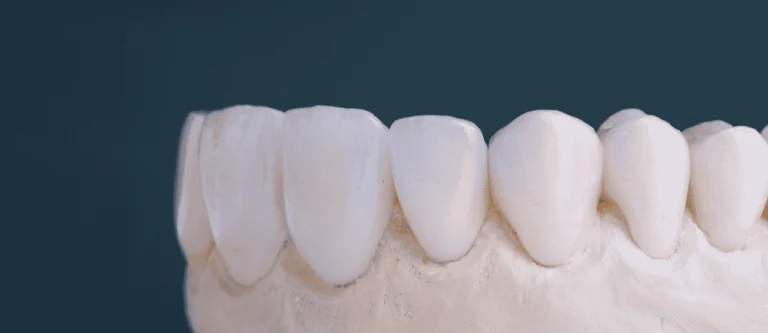

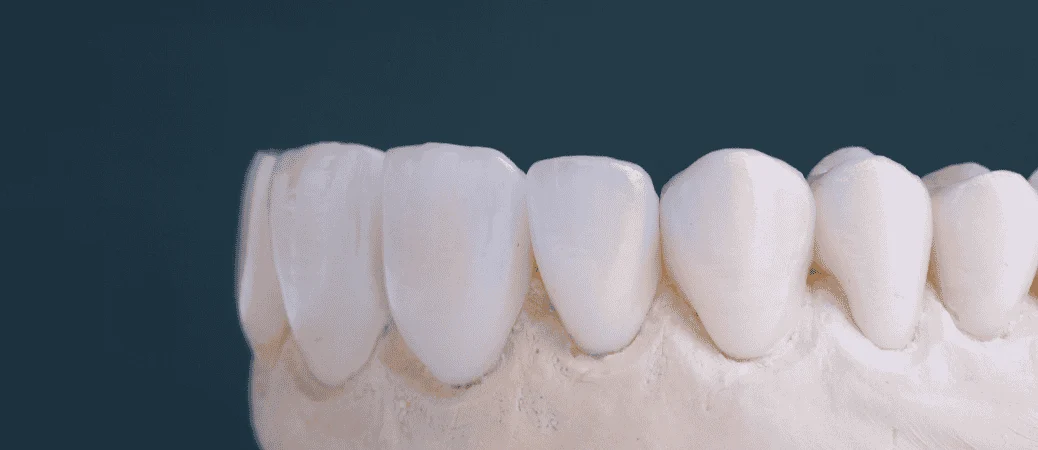
When comparing dental bonding vs crown for chipped tooth repair, the amount of remaining healthy tooth structure matters.
Dental bonding is often a suitable choice for a small chip because it restores the missing edge while preserving most of the natural tooth.
A dental crown may provide better protection when the damage is extensive or the remaining tooth walls are weakened.
Your choice involves more than the chip you see. A small break beside a large filling deserves a different assessment from a clean chip in an otherwise healthy tooth.
Your dentist also needs to check for deeper cracks and pressure from your bite before recommending tooth repair.
When Is Bonding Enough, and When Is a Crown Needed?
Your remaining healthy tooth structure helps determine whether bonding provides enough support or whether you need protective coverage.
Your dental assessment should include the depth of the damage, existing fillings, and how your teeth meet.
Small Chips and Healthy Tooth Structure Often Favor Bonding
Dental bonding may be a suitable option when the chip is small and enough healthy tooth structure remains to support the repair.
Your dentist applies tooth-colored composite resin to rebuild the missing portion, usually with little or no removal of healthy enamel.
Exposed dentin, the layer beneath your enamel, does not automatically mean you need a crown. A composite repair may protect the exposed area and restore the tooth when enough healthy structure remains.
Extensive Damage May Need the Protection of a Crown
You may need a full-coverage crown when a large break, deep decay, or an extensive filling leaves your tooth walls weak. Your crown covers the prepared tooth and helps protect the remaining structure during chewing.
Your dentist must also decide whether your tooth is restorable. A crack extending deep into your root can limit treatment options, and a crown cannot guarantee that a crack will stop progressing.
How Do Front Teeth, Molars, and Your Bite Affect the Choice?
Front teeth require careful attention to shape and color, while molars must withstand greater chewing forces.
If a molar has a fractured chewing cusp or weakened tooth walls, a dental crown may provide the coverage needed to protect the remaining structure.
Your biting forces, also called occlusal forces, affect the repair choice at either location. A small molar chip does not automatically require a crown, and a front-tooth repair needs careful bite adjustment if your lower teeth strike it heavily.
During your restorative dentistry visit at Beacon Dental, ask your dentist to show you which tooth walls remain strong and where added support is needed.
What Does Each Treatment Involve?
With bonding, you receive a repair built directly onto your tooth; with a crown, you receive a custom covering after your tooth is reshaped. Both treatments require a careful check of your bite.
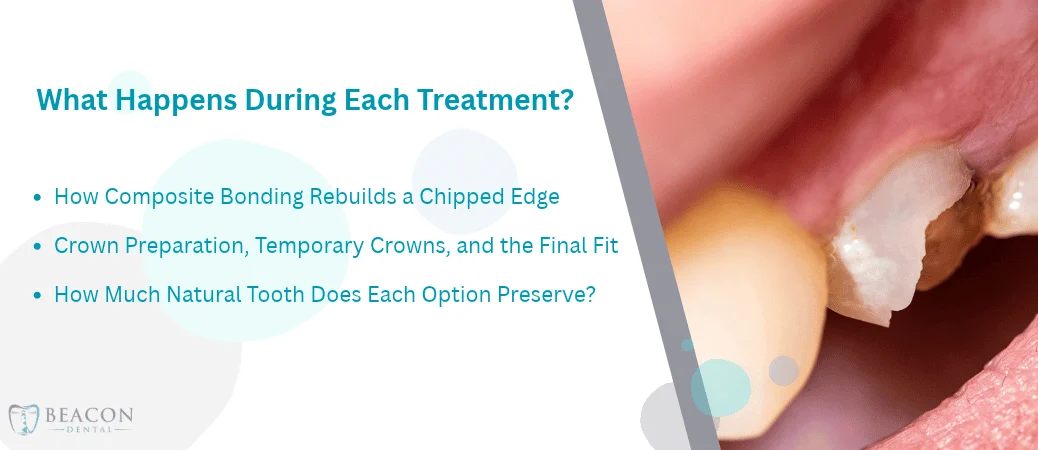
How Composite Bonding Rebuilds a Chipped Edge
Your dentist selects a tooth-colored composite resin, cleans the damaged area, and prepares the surface for adhesion. The resin is shaped onto your tooth and hardened with a curing light.
Your dentist then polishes the repair and checks contact with your other teeth. Minor tooth bonding often takes one appointment, with little or no enamel removal.
Here, “bonding” means direct composite bonding. The adhesive used to attach a crown is also a bonding material, but it serves a different purpose.
Crown Preparation, Temporary Crowns, and the Final Fit
Your crown preparation begins with removing decay and shaping your tooth to create space for the covering. Your dentist takes a scan or impression to record the prepared tooth and your bite.
At Beacon Dental, CEREC technology allows many dental crowns to be designed, fabricated, and placed in a single visit.
Your dentist uses a digital scan to create a customized restoration and checks its appearance, fit, and bite before securing it.
Some cases may still require a laboratory-made crown and a temporary restoration. Your dentist will explain which approach is suitable for your tooth.
How Much Natural Tooth Does Each Option Preserve?
You retain more untouched tooth tissue with a small additive composite repair. Crown preparation removes enamel and some underlying tooth structure around your tooth, making that change irreversible.
Tooth preservation also includes protecting weak areas from future breaks. Ask how much healthy tissue each option requires removing and whether a partial-coverage restoration would provide enough support.
| What you compare | Dental bonding | Dental crown |
| Repair area | Missing portion | Full visible tooth |
| Tooth preparation | Minimal removal | Circumferential shaping |
| Main use | Supported chips | Weakened structure |
| Later repairs | Resin added locally | Material-dependent |
| Upfront cost | Lower | Higher |
How Do Bonding and Crowns Compare Over Time?
You should plan for maintenance with either repair, with crowns generally lasting longer and composite offering easier local repairs. Your bite and daily care influence how long either option serves you.
Expected Lifespan, Staining, and Repair Needs
Dental bonding can last several years with appropriate care, while crowns may provide longer-lasting protection for teeth with more extensive damage.
The lifespan of either restoration depends on its location, material, bite pressure, oral hygiene, and daily habits.
Regular examinations help your dentist determine when maintenance or replacement may be needed.
Your composite resin is more prone to staining and edge wear than glazed ceramic. If a small area chips, your dentist can often add resin locally.
Your crown also needs monitoring for loose cement, fractures, and decay at its edges. Some crown chips are repairable; a major fracture or poor fit requires replacement.
How Crown Materials Affect Strength and Appearance
Your crown material affects both appearance and the space needed during preparation. For a visible tooth, you may prefer a ceramic that closely matches the light transmission of your natural enamel.
Tooth-colored ceramic and porcelain crowns can be designed to complement the shape and shade of nearby teeth.
Your dentist considers the tooth’s location, chewing forces, remaining structure, and appearance when recommending a suitable crown material.
If the chip affects a visible front tooth, cosmetic dentistry can help you explore ways to improve your smile’s appearance.
Your dentist will also consider tooth strength and bite function when recommending the most suitable repair.
Protecting Your Repair With Daily Care and Grinding Management
You protect your repair by brushing with fluoride toothpaste and cleaning between your teeth every day. Your natural tooth remains vulnerable to decay around the restoration.
If you have teeth grinding or clenching, ask about a fitted night guard and a bite assessment. Avoid chewing ice or using your teeth to open packaging.
Keep your dental check-ups so your dentist can inspect the repair and your oral health. Report a rough edge, new sensitivity, or a change in how your teeth meet.
How Much Does Each Option Cost?
You will usually pay less upfront for dental bonding than for a crown. Your full estimate should include any treatment needed beneath or around the repair.
Upfront Costs and What Changes Your Estimate
For a broad U.S. planning range in U.S. dollars, you may encounter 100-600 per tooth for dental bonding and 800-2,500 per tooth for dental crowns. These figures are ballpark amounts, not current local quotes.
Your treatment estimate depends on the complexity of the repair, the crown material, and whether additional procedures are needed
Ask your dentist whether the estimate includes the examination, imaging, tooth buildup, and any temporary restoration required.
Insurance Coverage and Long-Term Repair Costs
Dental insurance coverage for bonding or crowns depends on your individual plan and whether the procedure is considered restorative or cosmetic.
At Beacon Dental, the insurance coordinator can help you understand your benefits, expected out-of-pocket expenses, and available payment arrangements before treatment.
Patients can also explore insurance and financing options, including CareCredit, Cherry, and Sunbit. These financing providers offer payment plans for eligible patients, subject to approval and applicable terms.
Choose the Repair That Preserves and Protects Your Tooth

Choose the least invasive repair that gives your tooth dependable support: bonding for a supported chip, or protective coverage when your remaining structure needs it.
Your dental assessment should explain the reason for removing any healthy tissue.
At Beacon Dental, Dr. Kaitlyn Spencer can assess the extent of your tooth damage, remaining healthy structure, and bite to help determine whether dental bonding or a crown is the more appropriate option.
Frequently Asked Questions
Your chipped-tooth treatment starts with an examination, even when the damage looks minor. These answers address practical concerns to raise at your visit.
Does a small chipped tooth really need a crown?
You often have a more conservative option for a small chip in a healthy tooth. A crown becomes more reasonable if the visible chip sits beside a large filling or signals deeper structural damage.
Can bonding on a front tooth be repaired if it chips again?
You can often have a small composite chip repaired by adding fresh resin. If your repair breaks repeatedly, ask your dentist to check your bite and the supporting tooth before repeating the same repair.
Will I need a crown after root canal treatment?
Whether you need a crown after root canal treatment depends on the tooth’s location, remaining structure, and chewing forces.
Back teeth often benefit from protective coverage because they withstand greater biting pressure.
Your dentist will determine whether a crown or another suitable restoration provides enough long-term support.
If you have persistent pain or lingering temperature sensitivity, these signs you might need a root canal warrant an examination.
Could an onlay or veneer be an alternative to a crown?
You may qualify for an onlay when damaged chewing cusps need coverage but other tooth surfaces remain sound.
A veneer suits selected front-tooth appearance concerns when you have enough healthy enamel and a favorable bite.
How soon should I see a dentist about a chipped tooth?
Contact your dentist promptly for an assessment, even if the chipped tooth does not hurt. Seek urgent dental care if you have severe pain, swelling, a loose tooth, or a large break that exposes the inner tooth tissue.
If swelling affects your breathing or swallowing, seek emergency medical care immediately.