



You may wake up with jaw pain because of nighttime grinding, daytime clenching, or a temporomandibular disorder; sleep apnea is another possibility when you also have snoring, gasping, breathing pauses, or daytime sleepiness.
Dental problems and pressure from your sleeping position also deserve attention.
Waking up with a sore jaw does not tell you which condition you have. The location of your morning jaw pain offers useful clues: a tender cheek muscle feels different from one painful tooth or a jaw joint that catches when you open.
If your jaw pain in the morning keeps returning, arrange a dental exam. When grinding or clenching is contributing to tooth wear, custom night guards can help protect your teeth and dental restorations.
Mention any snoring, gasping, or other breathing symptoms so your dentist can determine whether a sleep evaluation is also needed.
Could Grinding, Clenching, or TMD Explain the Pain?
Your morning soreness may come from overworked chewing muscles or irritation around your jaw joints.
Nighttime grinding and daytime clenching sometimes overlap with temporomandibular disorders, but each needs its own assessment.
How Does Sleep Bruxism Strain Your Jaw?
When you have sleep bruxism, your jaw muscles repeatedly tighten during sleep.
Teeth grinding during sleep puts force on your teeth and supporting tissues; jaw clenching during sleep creates pressure even without a grinding sound.
Symptoms of bruxism may include jaw soreness, facial muscle tenderness, sensitive teeth, or headaches around the temples. Repeated grinding and clenching can also damage teeth and existing restorations.
If significant damage occurs, restorative options such as dental crowns and bridges may help restore tooth strength and function, depending on the extent of the damage.
Can Daytime Clenching Leave You Sore the Next Morning?
Your daytime clenching can leave jaw muscle tension that carries into the next morning. With awake bruxism, you might hold your teeth together while concentrating or brace your jaw without making tooth contact.
Try checking your jaw during routine activities. Let your teeth separate and allow your tongue to rest gently without pushing against them. A phone reminder helps you notice jaw clenching before the tightness builds.
If you recently started a medication and then noticed more clenching, tell your prescriber. Keep taking prescribed medication unless your clinician advises a change.
Which Symptoms Suggest a Temporomandibular Disorder?
Your temporomandibular joints (TMJs) connect your lower jaw to your skull, with one joint on each side of your face.
Temporomandibular disorders (TMDs) are conditions that affect these joints, the chewing muscles, or surrounding structures.
Painful clicking, limited jaw movement, and discomfort while chewing may be signs that further evaluation is needed.
Your symptoms deserve an exam if you have painful clicking, limited opening, locking, or pain with chewing. TMJ pain also sometimes feels like ear pressure or spreads toward your temple and neck.
You might need care even if you never grind your teeth. Your jaw discomfort may reflect a mix of clenching habits, injury, arthritis, and other pain conditions. Painless clicking by itself usually needs no treatment.
When Could Sleep Apnea Be Involved?
You should consider a sleep evaluation when your sore jaw comes with signs of disrupted breathing. Obstructive sleep apnea (OSA) involves repeated narrowing or closing of your upper airway during sleep.
Which Breathing Symptoms Warrant a Sleep Evaluation?
Ask your medical clinician about sleep-disordered breathing if you have loud, frequent snoring or wake up choking or gasping. A partner’s report that your breathing repeatedly pauses is especially important.
Other sleep apnea symptoms include:
- You feel sleepy during the day despite enough time in bed.
- You wake with morning headaches or a dry mouth.
- You have mouth breathing alongside snoring.
- Your sleep feels unrefreshing or repeatedly interrupted.
These symptoms warrant assessment even if your jaw discomfort is mild. Your clinician determines whether you need a home sleep apnea test or an overnight laboratory test.
If you feel too sleepy to drive safely, arrange another way to travel.
What Does the Evidence Say About Apnea and Bruxism?
You can have both sleep bruxism and obstructive sleep apnea, but having one does not establish the other. Their relationship is an association, with uncertain cause and effect.
Your grinding episodes sometimes occur near brief awakenings, including awakenings related to breathing disruption.
The timing between breathing events and bruxism varies, so the idea that every grinding episode reopens your airway goes beyond what is established.
Poor sleep quality also complicates your pain symptoms. To choose appropriate care, your clinician needs both your breathing history and a dental assessment.
What Else Can Cause Morning Jaw or Tooth Pain?
Your tooth pain in the morning may come from a dental problem, sinus pressure, or strain outside the jaw joint. Pain centered on one tooth deserves particular attention.
Could a Dental Problem Be Causing Localized Pain?
If you can point to one painful tooth, arrange a dental exam. Cavities, a crack, an inflamed tooth nerve, or a tooth infection are possible explanations.
Pain when biting or lingering pain after hot or cold drinks gives your dentist useful clues.
Your gum health also deserves attention, particularly if you notice bleeding, swelling, or tenderness around your teeth. Appropriate periodontal care can help manage gum disease and protect the tissues supporting your teeth.
Partially erupted or impacted wisdom teeth may also cause discomfort at the back of your mouth and should be evaluated if symptoms persist.
Persistent sensitivity and pain when chewing are among the signs you might need a root canal, although a dental examination is needed to identify the cause.
When inflammation or infection develops inside a tooth, root canal treatment can help relieve discomfort and preserve the natural tooth.
Regular dental cleanings and exams also provide opportunities to monitor tooth wear, gum health, and changes in your bite.
Can Sleep Position, Neck Strain, or Chewing Habits Contribute?
Your sleeping position may add pressure to an already sore jaw, especially if you press your face into a pillow or rest your jaw on your hand. Notice whether one side feels worse after sleeping on it.
Neck pain and poor head support also deserve attention. Choose a pillow that supports your neck without forcing your head sharply upward or downward.
During a flare, reduce excessive gum chewing and avoid chewing ice or tough foods. If you have malocclusion, meaning your teeth meet unevenly, ask your dentist whether a specific tooth is overloaded.
An uneven bite alone does not establish the cause of TMD.
Could Sinus Pressure Explain Upper Tooth Pain?
Your sinuses sit close to the roots of your upper back teeth. With a sinus infection or inflammation, you might feel a dull ache across several upper teeth alongside congestion or facial pressure.
Tell your clinician whether the discomfort changes when you bend forward. Also mention reduced smell, nasal drainage, or a recent respiratory illness.
You still need a dental check if one tooth hurts sharply or reacts strongly to temperature. Dental and sinus symptoms overlap, and a tooth infection sometimes affects a nearby sinus.
What Can Help Relieve Pain and Protect Your Teeth?
You can begin with gentle measures that reduce strain while arranging care for recurring pain. The right appliance or sleep treatment follows an assessment of what is causing your symptoms.

Which Gentle Home Measures Can Ease Jaw Soreness?
Give your jaw a temporary break from hard chewing and wide opening. Choose softer foods during a flare, take smaller bites, and avoid testing your jaw by repeatedly opening until it clicks.
Try these low-risk comfort measures:
- Use gentle heat therapy with a warm, wrapped compress for tight muscles.
- Try cold therapy with a wrapped cold pack if the area feels irritated.
- Practice jaw relaxation by keeping your teeth slightly apart at rest.
- Keep a regular sleep schedule and limit evening caffeine and alcohol.
Stop a compress if it irritates your skin. Avoid forceful stretching, deep pressure over a painful joint, or trying to push a locked jaw into place.
Better sleep hygiene supports your sleep quality, but persistent breathing symptoms need medical evaluation.
When Might a Dentist Recommend a Night Guard?
Your dentist may recommend a night guard if grinding or clenching is damaging your teeth. A fitted guard creates a barrier between your upper and lower teeth and helps protect dental work.
A custom night guard should be checked for proper fit and comfort. If wearing it causes new or worsening jaw pain, changes how your teeth meet, or makes your sleep feel worse, stop using it and contact your dentist for an assessment.
A mouth guard does not guarantee that your grinding will stop or your jaw pain will resolve. Your treatment also needs to address muscle habits, joint symptoms, and any breathing concerns.
How Does Sleep Apnea Treatment Differ From a Grinding Guard?
Sleep apnea treatment aims to maintain an open airway during sleep.
CPAP therapy delivers pressurized air through a mask, while a custom mandibular advancement device holds the lower jaw in a forward position to help reduce airway obstruction.
Although oral appliances may be appropriate for certain patients with obstructive sleep apnea, they can sometimes cause temporary jaw soreness, tooth discomfort, or changes in the bite.
These effects should be monitored during follow-up appointments.
Personalized sleep apnea treatment may help improve nighttime breathing when coordinated with your sleep clinician.
For patients who have difficulty tolerating a prescribed CPAP machine, discussing appropriate CPAP alternatives may help identify another suitable option.
Do not stop prescribed sleep apnea treatment without medical guidance. If oral appliance therapy is recommended, professional fitting, regular dental follow-up, and follow-up sleep testing help assess its effectiveness.
When Should You Seek Dental or Medical Care?
You should arrange an appointment for recurring, worsening, or persistent jaw pain, especially when it affects eating or opening your mouth. Severe symptoms and signs of infection need faster attention.
Which Symptoms Need Urgent or Emergency Attention?
Call 911 if you experience jaw pain with possible heart attack symptoms, such as chest pressure, shortness of breath, sweating, nausea, or lightheadedness.
Heart-related discomfort can also affect the jaw, neck, shoulders, or arms, sometimes without obvious chest pain.
Get emergency care for trouble breathing or swallowing, rapidly spreading facial or neck swelling, or a suspected broken or dislocated jaw. Seek urgent dental care for facial swelling with fever, pus around a tooth, or severe tooth pain.
A jaw that suddenly locks open or closed also needs prompt assessment. Avoid trying to force it into position yourself.
What Should You Track Before Your Appointment?
Record where your pain starts and whether it fades after waking or builds through the day. Note whether the discomfort centers on a tooth, the cheek muscles, or the area just in front of your ear.
Bring a short record of:
- Your pain severity and how long it lasts.
- Any painful clicking, locking, or trouble chewing.
- Your sensitivity to hot, cold, or biting pressure.
- Reports of grinding, snoring, gasping, or breathing pauses.
- Your medications, supplements, caffeine use, and alcohol use.
- Any guard or sleep apnea device you already wear.
Regular general dentistry visits help your dentist monitor your teeth, bite, and overall oral health. Bring your symptom notes and any night guard or sleep appliance you currently use so your dentist can assess its condition and fit.
When Might Specialist Care Be Appropriate?
You may benefit from an orofacial pain specialist if your pain persists despite conservative care or the diagnosis remains unclear. Physical therapy is another option when your jaw movement and neck function need attention.
If your symptoms suggest a sleep disorder, your clinician may recommend a referral to a sleep medicine specialist.
Sleep testing can help diagnose obstructive sleep apnea. Specialized overnight monitoring may also help evaluate sleep bruxism when further assessment is necessary.
If jaw pain persists despite conservative treatment, a specialist may recommend additional evaluation or treatment. Ask about the potential benefits, risks, and alternatives before proceeding with more advanced care.
Find the Cause Before Choosing a Jaw Pain Treatment
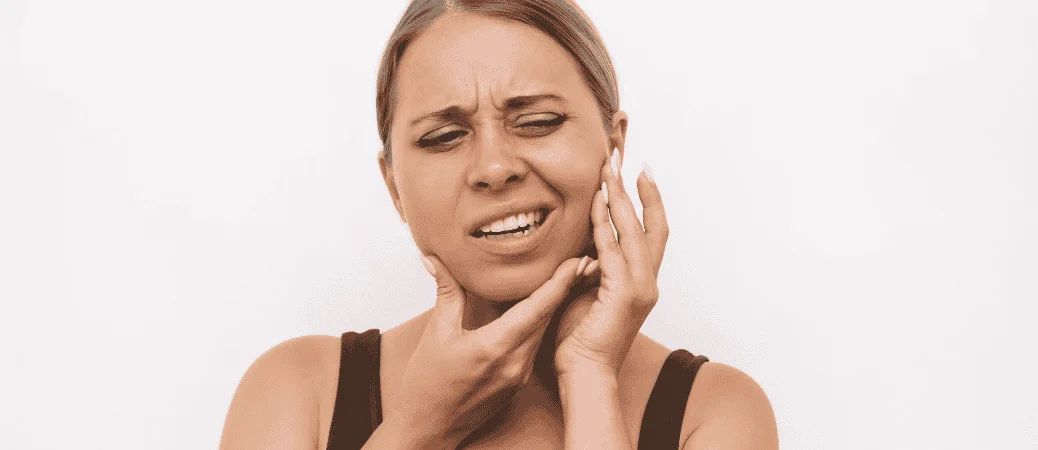
Your morning jaw pain deserves care matched to its cause. Bruxism, daytime clenching, and TMJ disorders are common explanations; sleep apnea deserves assessment when you also have breathing symptoms or daytime sleepiness.
At Beacon Dental, Dr. Kaitlyn Spencer can evaluate your teeth, bite, and jaw symptoms to help identify possible causes of morning discomfort.
If your symptoms suggest sleep apnea, she can discuss appropriate next steps and coordination with a sleep specialist.
Frequently Asked Questions
Your symptoms offer useful clues, while an examination helps you choose safe treatment.
Why does only one side of my jaw hurt when I wake up?
Your one-sided pain may reflect uneven muscle strain, irritation in one jaw joint, a dental problem, or pressure from your sleep position. Tell your dentist whether you feel pain near your ear or in a particular tooth, especially if chewing makes it worse.
Can I grind my teeth at night without knowing it?
Yes, you can have sleep bruxism without hearing it or waking up. Your first clue might be a partner’s report, morning muscle tenderness, or changes your dentist notices in your teeth.
Does morning jaw pain mean I have sleep apnea?
Your morning jaw pain alone does not establish sleep apnea. If you also snore loudly, wake gasping, have witnessed breathing pauses, or feel sleepy during the day, request a sleep evaluation.
Can a night guard treat both grinding and sleep apnea?
A standard night guard helps protect teeth from grinding but does not treat obstructive sleep apnea. A custom mandibular advancement device is designed to improve airflow during sleep in suitable patients.
If you experience both grinding and sleep apnea, your dentist and sleep clinician can help determine which appliance is appropriate for your needs.
What sleeping position is best if I have jaw pain and snore?
You may find side sleeping helpful for snoring, provided your pillow supports your neck and avoids firm pressure against your jaw. Back sleeping worsens obstructive sleep apnea in some people, so ask your sleep clinician about positioning and continue your prescribed treatment.


